What Is Alder Clearing?
Alder (Alnus incana — speckled alder — and related species) is one of Maine's most aggressive woody shrubs. It colonizes wet-edge areas — stream banks, pond margins, old drainage ditches, field edges, and disturbed wet ground — forming dense, multi-stemmed thickets that block access, shade out pasture grass, and take over land surprisingly fast. Alders are not technically classified as invasive, but they behave like one in Maine's landscape. A neglected field edge or drainage way can go from manageable to impenetrable in 5–10 years. Forestry mulching handles alder thickets better than almost any other situation: the mulcher cuts and grinds the dense multi-stem growth cleanly and efficiently, including the root collar, leaving a flat surface with no stumps or debris.
How It Works
- We assess the extent of your alder growth and identify any drainage features, wet areas, or soil conditions that affect equipment access.
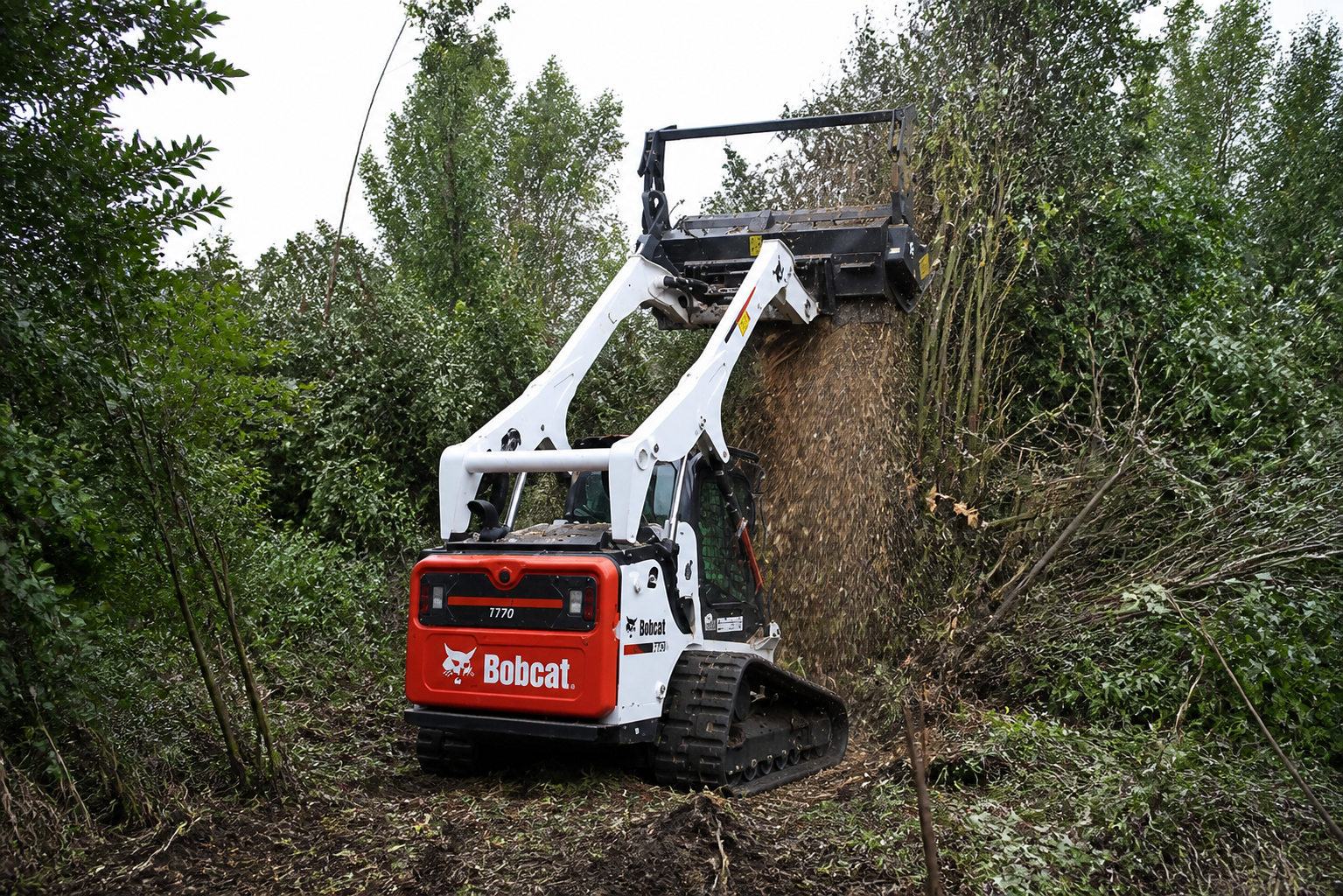
- Our mulching equipment drives through the thicket, handling multi-stem alder growth up to 6–8 inches at the base efficiently.
- The alder is ground to fine mulch at grade level — no stumps, no debris piles.
- For wet or soft ground conditions, we use tracked equipment with lower ground pressure to minimize rutting.
- Most alder clearing jobs are completed in a single day.