Acreage Clearing Co.

Invasive Plant Removal in Maine

Bittersweet, barberry, buckthorn, multiflora rose — Maine's most destructive invasives cleared at scale using forestry mulching equipment.

What Is Invasive Plant Removal?

Maine's Department of Agriculture has listed 33 invasive plants as prohibited. The most damaging — Oriental bittersweet, Japanese barberry, glossy buckthorn, and multiflora rose — spread aggressively across Maine's forests, old pastures, and disturbed land, outcompeting native vegetation and degrading property values. Forestry mulching grinds the entire plant — stems, crown, and root collar — to ground level in one efficient pass. It's the most effective large-scale mechanical removal method available, capable of clearing acres in a day that would take a crew weeks by hand.

How It Works

  1. We identify the species present, the extent of the infestation, and any native trees or plants to preserve.
  2. The forestry mulcher drives through infested areas, grinding all above-ground and crown tissue to fine mulch.
  3. Grinding the root crown disrupts the plant's resprouting ability far more effectively than cutting alone.
  4. The mulch layer left behind suppresses immediate regrowth and protects bare soil.
  5. For species like knotweed that resprout aggressively, we recommend a targeted follow-up treatment plan.
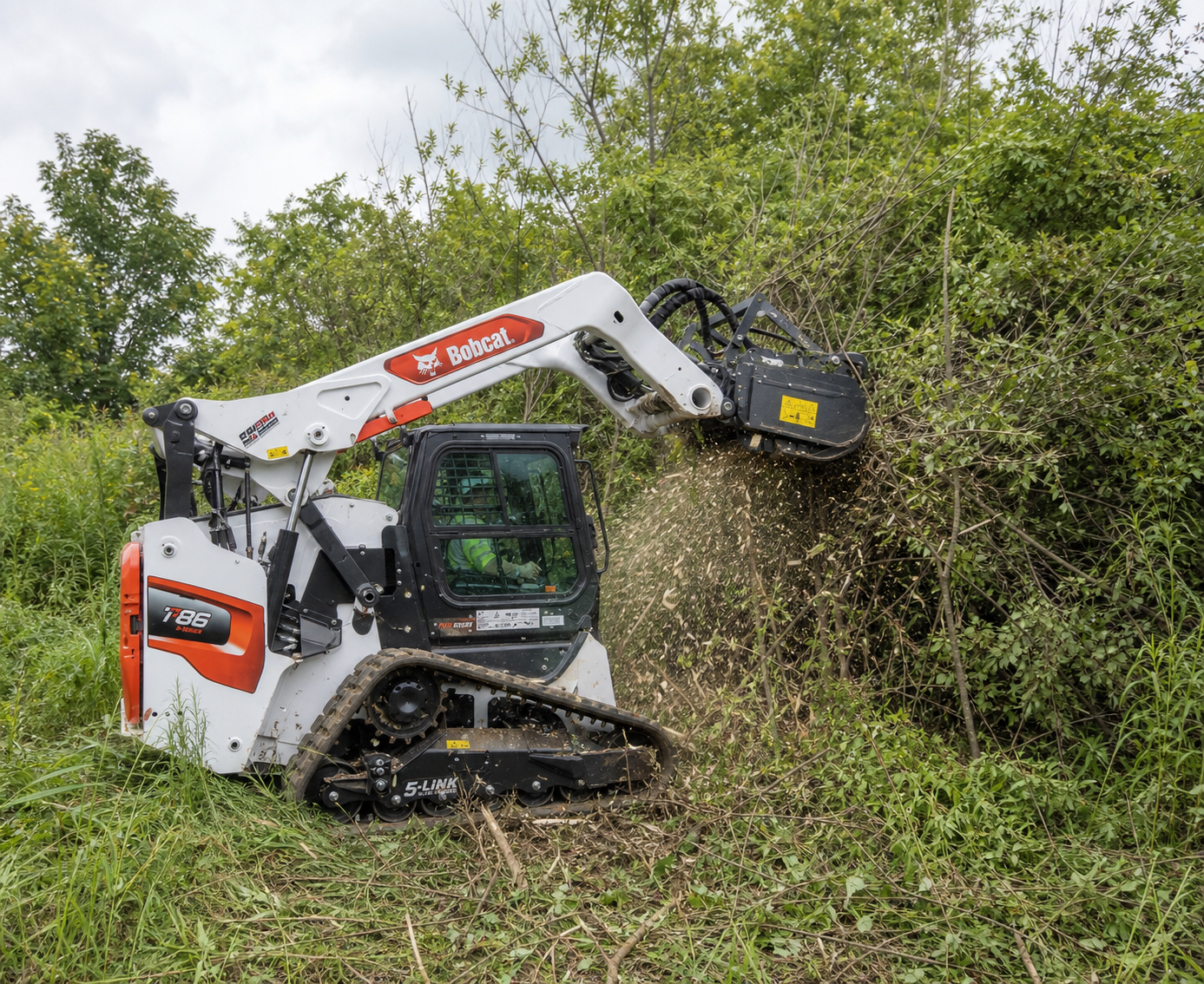
Bobcat mulching head attacking dense invasive brush growth in Maine

Invasive Plant Removal — Common Questions

What invasive plants do you remove in Maine?

We remove all of Maine's major invasive shrubs and vines: Oriental bittersweet, Japanese barberry, glossy buckthorn, multiflora rose, autumn olive, Japanese knotweed (with important caveats — see below), and others. Mention the species you're dealing with when requesting your quote.

What's the Lyme tick connection to barberry?

Japanese barberry is Maine's most significant tick habitat plant. Studies have documented up to 120 infected Lyme ticks per acre in barberry-infested areas compared to nearly zero in cleared areas. Maine has one of the highest Lyme disease rates in the country. Removing barberry from your property is one of the most effective ways to reduce tick exposure for your family and pets.

Can you remove Japanese knotweed?

Knotweed requires a specific approach. Mulching alone can sometimes spread knotweed by chipping root fragments into the soil — making it worse, not better. For knotweed, we recommend a combined mechanical and targeted herbicide program managed carefully. If knotweed is present on your property, mention it specifically when requesting your quote so we can discuss the right approach.

Does forestry mulching permanently remove invasives?

For shrubby invasives like barberry, buckthorn, and multiflora rose, a thorough mulching dramatically reduces the population and most sites need only light follow-up. Bittersweet resproutes more aggressively and typically benefits from one follow-up pass or targeted spot treatment the following season. Complete eradication takes 2–3 seasons of effort for most dense infestations.

How much does invasive removal cost in Maine?

Most jobs run $1,500–$5,000 per acre depending on species, density, and terrain. Dense bittersweet or barberry on rough ground at the higher end; lighter mixed infestations on flat land at the lower. We quote each site individually after reviewing your property.

Related Services

Ready to Clear Your Maine Property?

Free quotes. Honest pricing. One day turnaround on most jobs.