What Is Brush Hogging?
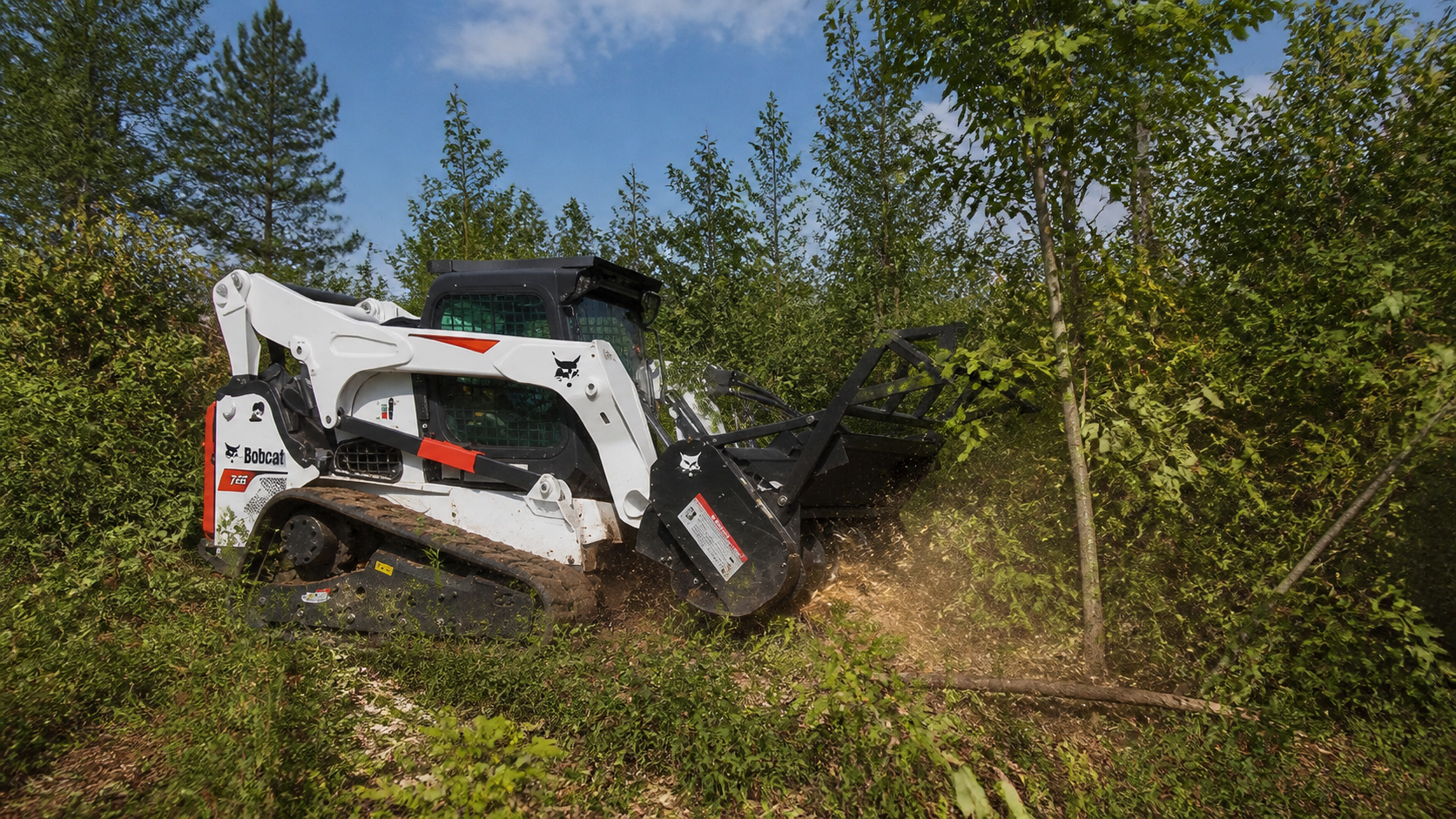
Maine has hundreds of thousands of acres of old pasture and abandoned farmland — fields that were cleared by previous generations and are now actively reverting to forest. The typical succession pattern in Maine goes: grass and goldenrod → poplar saplings and pin cherry → alders and bittersweet → forest. Brush hogging intercepts that process. A heavy-duty rotary mower — the brush hog — mounts to a tractor and cuts down tall weeds, grasses, goldenrod, multiflora rose, poplar saplings up to 3 inches, pin cherry, and overgrown brambles across open and semi-open land efficiently. It's the right tool for fields, roadsides, and open areas that haven't crossed the threshold into dense woodland.
How It Works
- The brush hog mounts to the rear of a tractor via the PTO (power take-off) and is driven across your field or overgrown area.
- Heavy rotating blades cut and shred everything — grass, goldenrod, brambles, multiflora rose, and saplings up to 3 inches in diameter.
- Material is left as fine clippings on the surface — no hauling required.
- Multiple passes or lower cut heights can be made to achieve a cleaner result.
- Most open land jobs move at 2–4 acres per hour depending on growth density.